
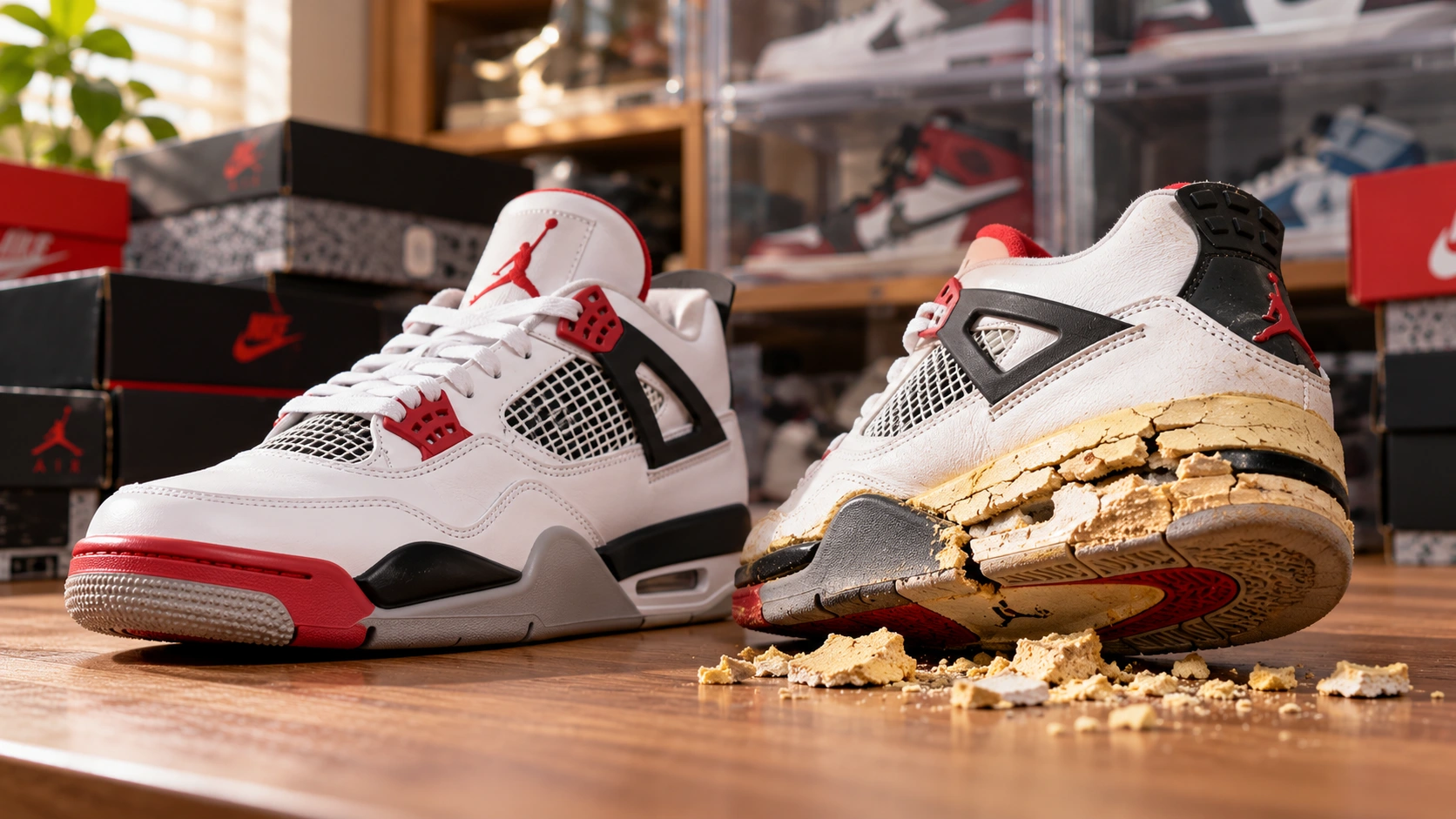
Why Do Sneaker Soles Crumble Even When You Never Wear Them?
Your sneakers have been sitting in their box for years, barely worn, yet their soles crack, crumble, or separate when you finally take them out. Learn why this happens, what hydrolysis means, and how to slow down deterioration in collectible sneakers.
Why Do Sneakers Fall Apart Without Being Worn?
Some sneaker collectors have experienced a frustrating surprise: a favorite pair has been stored in its original box for years and still looks almost new, but the sole cracks, crumbles, or separates as soon as they try walking in it. This damage isn't always caused by wear. Shoe materials can deteriorate naturally over time, even when the shoes have never been used. One particularly vulnerable material is certain types of polyurethane (PU) used in midsoles. These materials can break down through a moisture-related chemical reaction called hydrolysis.
What Is Hydrolysis?
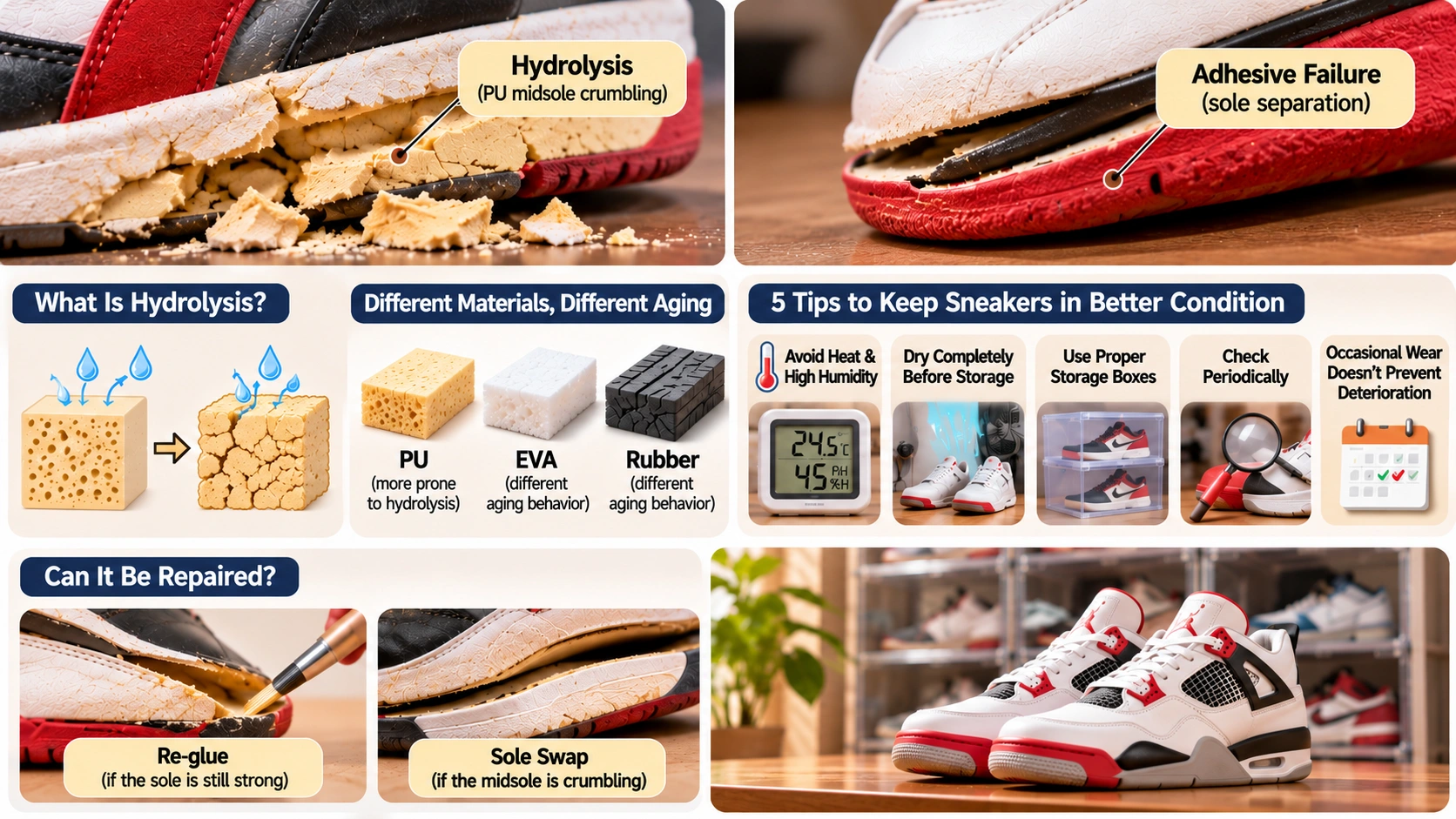
Hydrolysis is a chemical reaction in which water participates in breaking chemical bonds within certain materials. In some polyurethane midsole formulations, this process can weaken the material until it cracks, becomes crumbly, or breaks apart under pressure. Heat and humidity can accelerate deterioration, and keeping sneakers inside their original box does not completely prevent it. However, not all sneaker soles deteriorate in the same way. EVA foam and rubber may age differently from polyurethane. Sole separation can also result from deteriorating adhesives rather than hydrolysis of the sole material itself.
5 Ways to Slow Down Sneaker Deterioration
1. Avoid Hot and Humid Storage Areas Store sneakers in a place with relatively stable temperatures, away from direct sunlight and walls that become excessively hot. If your room experiences prolonged high humidity, especially during rainy seasons, consider using a hygrometer to monitor conditions. A dehumidifier may help when necessary. 2. Never Store Damp Sneakers in a Box After wearing or cleaning your sneakers, allow them to dry completely in a well-ventilated area before putting them away. Trapped moisture can increase the risk of mold, unpleasant odors, and deterioration of certain shoe materials. 3. Use Storage Boxes Appropriately Shoe boxes help protect sneakers from dust and light, but they do not automatically control humidity. If you use tightly closed plastic storage boxes, check the humidity inside periodically. An airtight container does not necessarily preserve sneakers better. Silica gel may help absorb moisture in enclosed spaces, but its capacity is limited. It cannot completely stop the chemical deterioration of sneaker soles. 4. Inspect Your Sneakers Periodically Even if you rarely wear them, take your sneakers out occasionally to check for cracks, crumbling foam, adhesive separation, or other material changes. Avoid forcefully bending or twisting old soles during inspection. If the material has become brittle, this can cause further damage. 5. Don't Assume Wearing Sneakers Prevents Sole Crumbling A common belief is that unworn sneakers deteriorate faster than pairs worn regularly. In reality, deterioration depends on the material, its age, and storage conditions. Occasional wear does not guarantee protection against hydrolysis. Sneakers with weakened soles may break apart when weight is applied.
Can Crumbling Sneaker Soles Be Repaired?
First, identify the type of damage. If the adhesive has failed but the sole material remains strong, a professional shoe repairer may be able to clean the bonding surfaces and reattach the sole using suitable adhesives. However, if the polyurethane itself has become brittle or crumbly, simply applying more glue cannot restore its original strength. The damaged sole may need to be replaced entirely through a process commonly called a sole swap, ideally performed by an experienced specialist. For rare collectible sneakers, replacing the sole may affect originality and collector value, so consider the implications before proceeding.
Sneakers That Look New May Not Be Safe to Wear
Sneakers stored for many years may have weakened soles even if the exterior still looks nearly perfect. If you notice crumbling material, separation, cracks, or unusual changes in the sole, avoid wearing the shoes for walking or running. The sole could fail unexpectedly and cause a fall. Preserving sneakers as collectibles and keeping them wearable are two different goals, and each requires different considerations.