
Why Do Book Pages Turn Yellow? How to Slow Down Yellowing in Manga and Books
Why do manga and book pages turn yellow even when kept away from sunlight? Learn practical storage tips, including humidity control, protective sleeves, silica gel, and choosing the right bookshelf.
Why Do Books Turn Yellow Even When Stored Carefully?
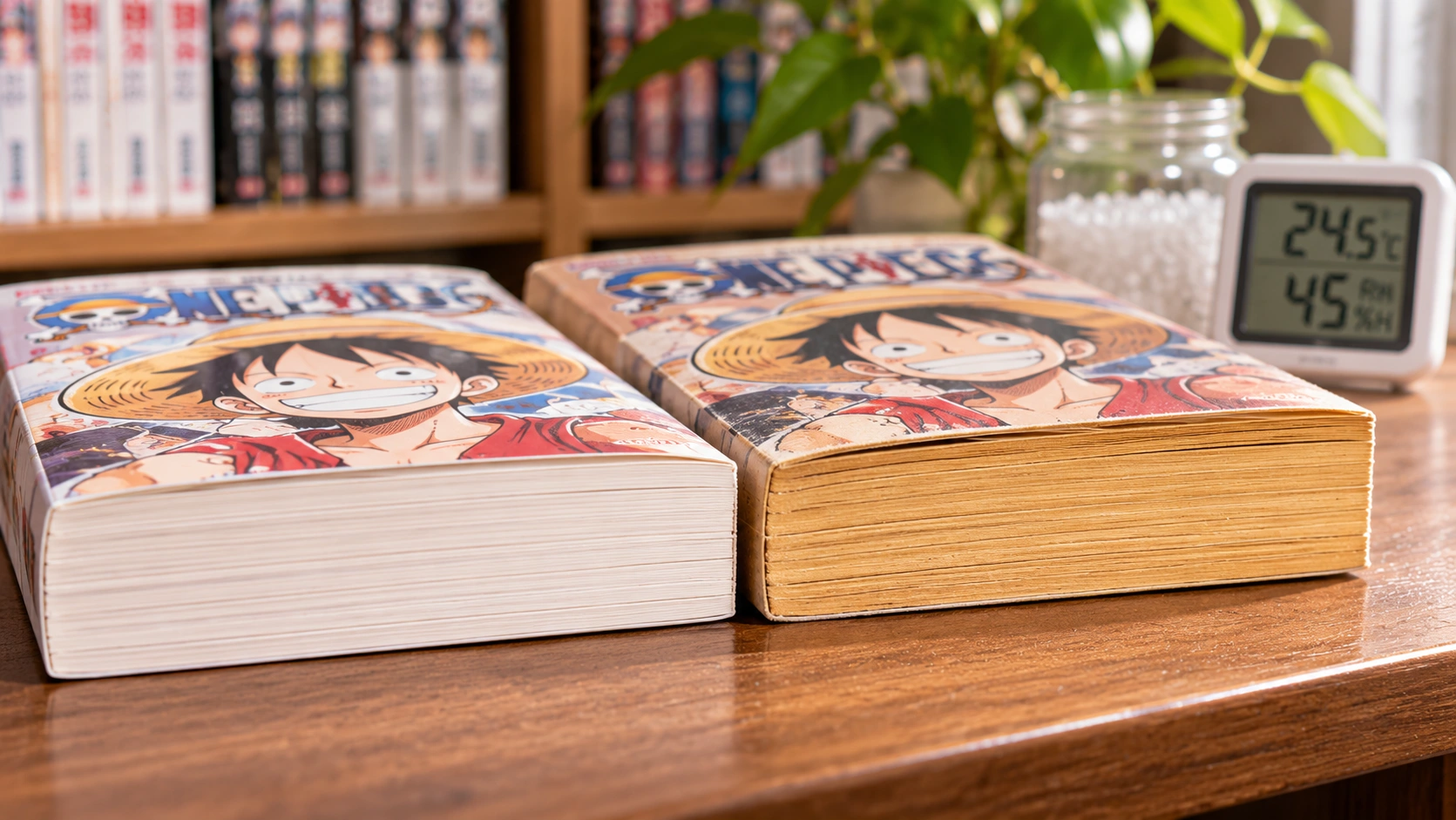
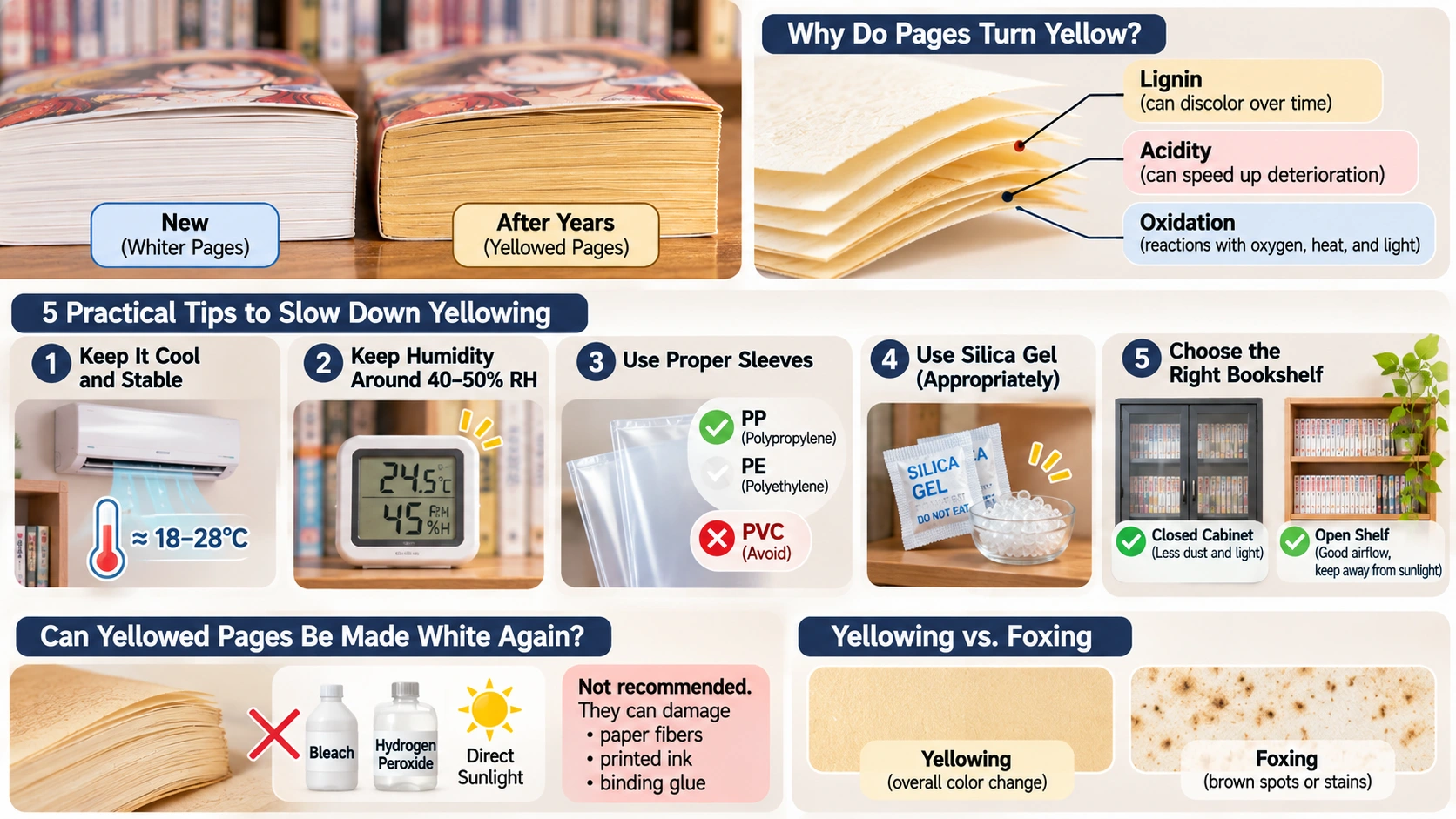
If you've collected manga, novels, or books for years, you may have noticed that pages once bright and clean gradually turn yellow, especially around their edges. The main reason is the chemical aging of paper. Some wood-based papers contain lignin and other compounds that can change color through oxidation. Acidity in the paper can also accelerate deterioration. Even books stored in darkness can yellow with age. However, proper storage can help slow the process.
5 Ways to Slow Down Yellowing in Manga and Books
1. Store Books in a Cool, Stable Environment Heat accelerates the chemical reactions that cause paper to deteriorate. Avoid storing books near sunny windows, heat-exposed walls, or in hot attic spaces. A room with reasonably stable air conditioning can be helpful, but you don't need to run the AC 24 hours a day. The priority is avoiding excessive heat and dramatic temperature changes. 2. Keep Relative Humidity Around 40–50% High humidity increases the risk of mold and paper deterioration. Consider placing a small hygrometer near your bookshelf to monitor relative humidity. If humidity remains high, especially during rainy seasons, a dehumidifier may help maintain better conditions. Avoid making the environment excessively dry, as some papers and binding adhesives may also be affected. 3. Choose the Right Protective Sleeves Plastic sleeves can protect books from dust and direct handling, but they cannot completely stop paper from yellowing. For long-term storage, choose stable materials such as archival-suitable polypropylene (PP) or polyethylene (PE). Avoid PVC sleeves. Make sure books are completely dry before placing them in sleeves. Sealing a damp book inside plastic may trap moisture and create additional problems. 4. Use Silica Gel Carefully Silica gel can absorb moisture in enclosed spaces such as storage boxes, but its capacity is limited. Once saturated, it needs to be replaced or properly regenerated. Keep silica gel in a suitable packet or container, away from direct contact with books. Monitor humidity inside the box rather than relying on silica gel alone. You generally don't need silica gel in every book sleeve, especially if the room already has suitable humidity. 5. Choose a Bookshelf That Suits Your Room Closed cabinets help reduce dust and light exposure, but moisture may accumulate inside if conditions are poor. Open shelves allow more air circulation, although books may be more exposed to dust and sunlight. Whichever you choose, keep your books away from potential water leaks, excessive heat, and direct sunlight. Check their condition periodically.
Can Yellowed Pages Be Made White Again?
When paper yellows because of chemical aging, there is generally no safe DIY method to restore its original whiteness. Avoid using bleach, hydrogen peroxide, or direct sunlight to whiten pages. These methods can damage paper fibers, printed ink, and binding adhesives. For collectible books, preserving their current condition is often safer than attempting to reverse discoloration. If you own a rare or valuable book, consult a professional paper conservator before attempting treatment.
Is Yellowing the Same as Foxing?
Not exactly. Yellowing usually affects the overall color of the paper, while foxing appears as localized brown spots or stains. Foxing can involve several factors, including paper composition and storage conditions. A book can develop both yellowing and foxing at the same time.