
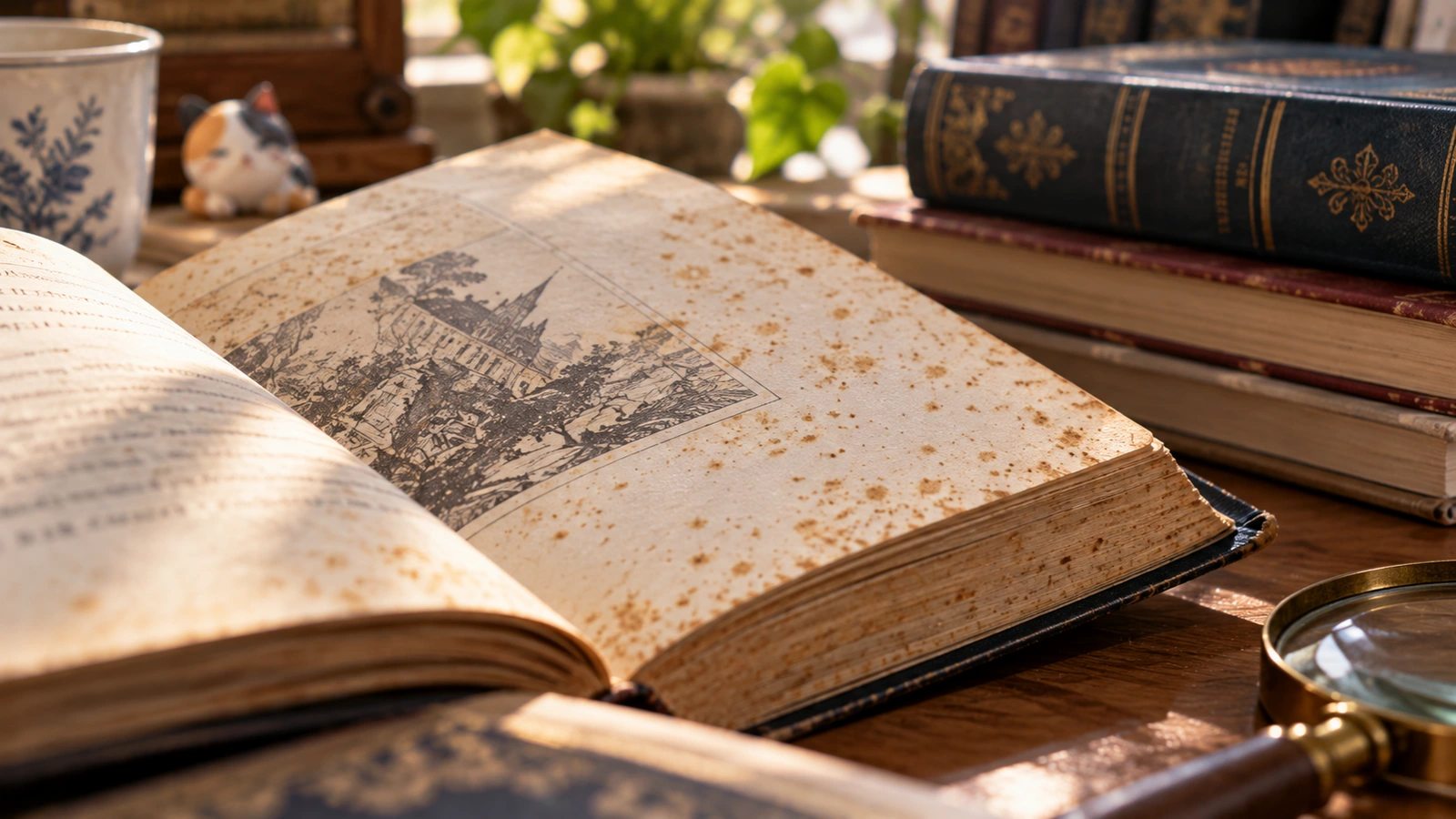
What Is Foxing on Books? Can Brown Spots Be Removed?
Have you ever opened an old book or manga and noticed brown spots scattered across the pages or edges? These marks are called foxing. What causes them, and how can you prevent them from getting worse?
What Is Foxing?
Have you ever taken an old book off the shelf and found small, rust-colored spots scattered across its pages? These marks are known as foxing. They can appear on old books, manga, documents, and prints, either as small individual spots or clusters of brown stains. Foxing can have several causes, including reactions involving metallic impurities in paper and changes associated with fungal activity. Humidity is an important factor that can make the problem worse.
Can Foxing Be Removed?
Existing foxing marks are usually difficult to remove because the discoloration may extend into the paper itself. Avoid experimenting with bleach, alcohol, or other cleaning chemicals. They can fade printed ink, damage the paper, or leave even worse stains. For rare or personally important books, consult a professional paper conservator if you want to explore treatment options.
How Can You Prevent Foxing from Getting Worse?
1. Control humidity Store books in a dry, well-ventilated area. Avoid damp walls and places with high humidity. If you have a hygrometer, try to maintain a relatively stable humidity level of around 40–50%. 2. Avoid heat and direct sunlight Keep bookshelves away from direct sunlight and areas with large temperature changes. Heat and light can accelerate paper deterioration. 3. Check your books regularly Pay particular attention to books stored in boxes or left untouched for long periods. Occasionally inspect them for new spots or musty odors. If you notice fuzzy growth, a strong moldy smell, or damp pages, separate the affected book from the others. It may have active mold rather than just old foxing marks.
Should You Throw Away a Book with Foxing?
Not necessarily. Old foxing marks do not always mean that mold is actively growing or spreading. If the paper remains structurally sound and there is no moisture or active mold, you can generally continue keeping the book in your collection while maintaining suitable storage conditions.