
Can You Fix Yellowed White Figures and Gunpla? Causes, Solutions, and Prevention
White plastic figures, Gunpla, and model kits can gradually turn yellow even when stored away from sunlight. Learn what causes plastic yellowing, whether Retrobright can help, and how to prevent further discoloration.
Why Does White Plastic Turn Yellow Even Inside a Display Cabinet?
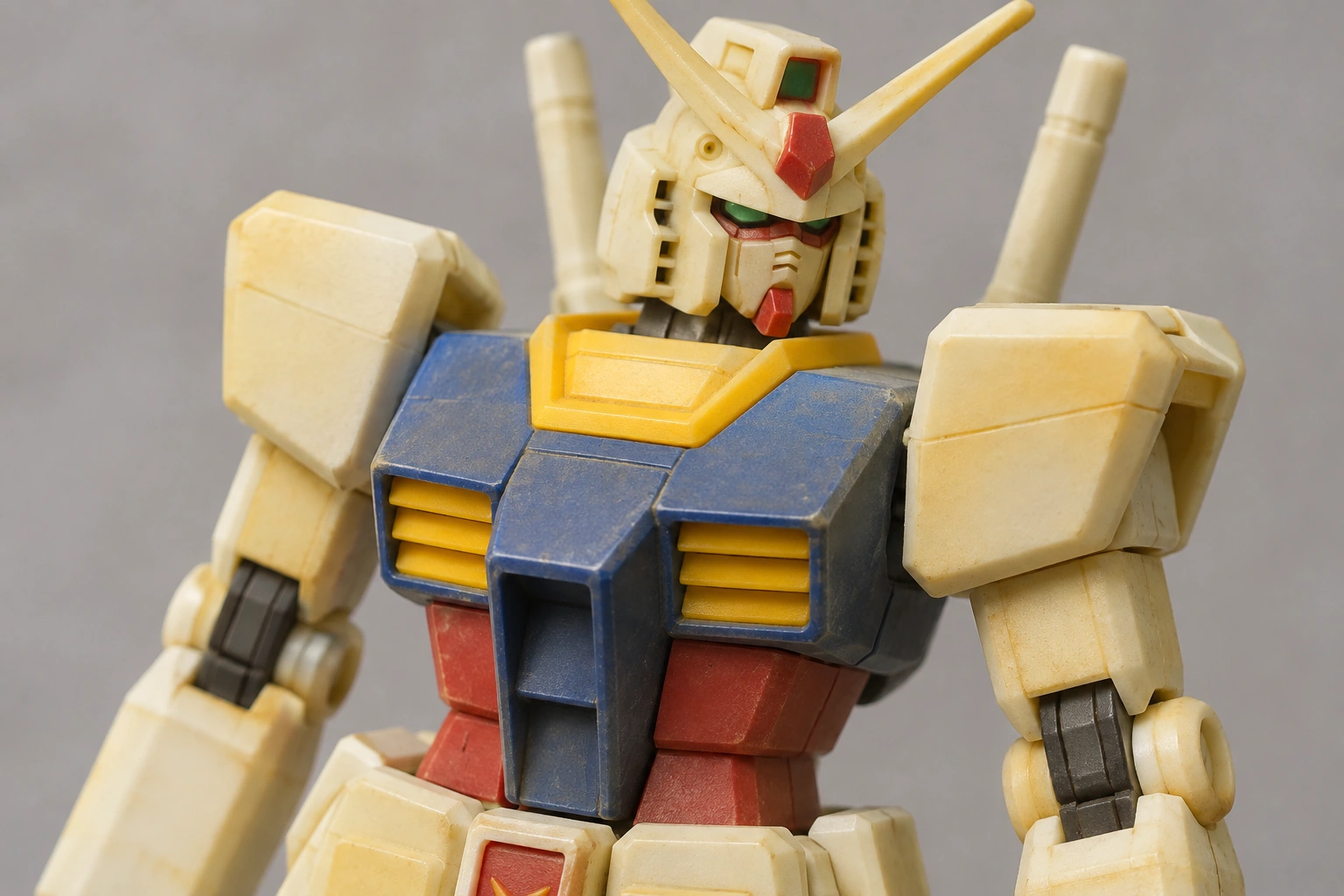
Collectors of figures and Gunpla may notice that models originally bright white gradually develop a yellowish or cream-colored appearance after several years. The difference becomes especially noticeable when compared with parts that have retained their original color. One cause is the natural deterioration of plastic over time, involving oxidation, light exposure, heat, and the material's chemical composition. Not all model plastics are identical. Polystyrene (PS), acrylonitrile butadiene styrene (ABS), and polyvinyl chloride (PVC) have different formulations, additives, and aging characteristics. Even models stored away from direct sunlight can discolor with age. Proper storage may slow yellowing, but it cannot guarantee that discoloration will never occur.
Identify the Cause Before Attempting a Fix
If a white part has turned uniformly yellow and the discoloration cannot be wiped away, the change may be occurring within the plastic itself or in its surface coating. First, determine whether the model is made from unpainted white plastic or has been painted and clear-coated. On painted models, yellowing may originate from the paint or clear coat rather than the underlying plastic. These situations require different approaches. Avoid immediately sanding the surface or applying chemicals, as either could permanently damage the original finish.
3 Ways to Deal With Yellowed Figures and Gunpla
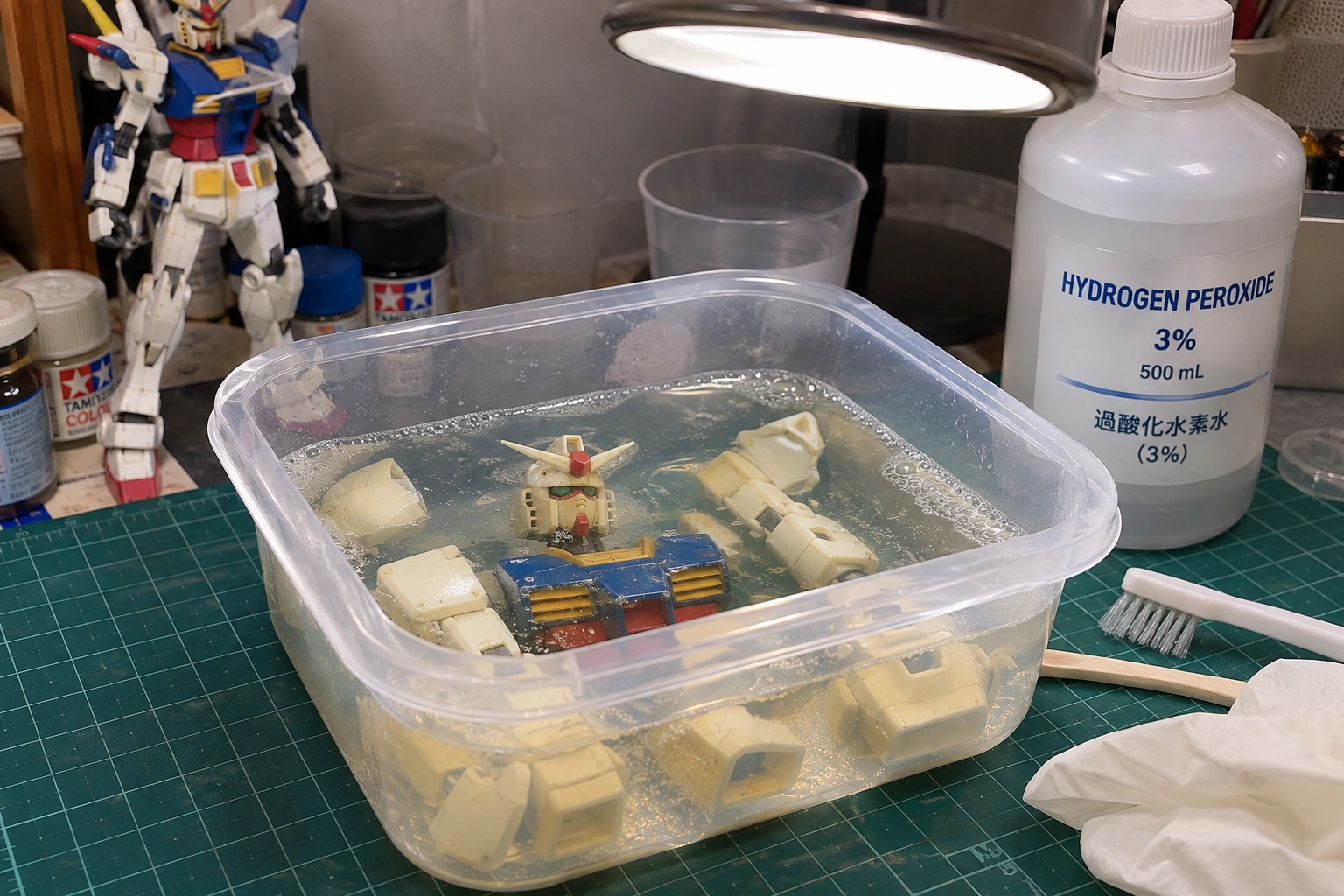
1. Start With Gentle Cleaning If you are unsure whether the discoloration is surface contamination or material yellowing, begin by gently removing dust with a soft brush or clean microfiber cloth. For unpainted plastic parts without decals, stickers, or electronic components, you may cautiously test a slightly damp cloth on a small, inconspicuous area. If dirt comes off but the yellow color remains, the problem may not be a surface stain. Cleaning cannot reverse discoloration that has developed within the plastic material. 2. Does Retrobright or Hydrogen Peroxide Actually Work? Retrobright is a commonly used name for treatments intended to reduce yellowing in certain older plastics, often involving peroxide-based chemicals and light or other controlled conditions. Some plastic objects have reportedly become visibly whiter after such treatment. However, results depend on the plastic type, its formulation, and the cause of discoloration. Making plastic appear whiter does not mean its original strength has been restored or that chemical aging has been completely reversed. For collectible figures and Gunpla, additional risks include: - Paint, printed details, and decals may fade, discolor, or become damaged. - Different plastics and colors may react differently. - The surface may undergo unwanted changes, and yellowing may return. - Hydrogen peroxide can irritate or injure skin and eyes, especially in concentrated forms. For these reasons, experimenting with Retrobright on rare collectibles, painted parts, or valuable figures is not recommended. Household chlorine bleach should not be used as a substitute. 3. Repaint White Parts When Cleaning Cannot Restore Their Appearance For Gunpla with removable plastic parts, repainting may provide a more consistent cosmetic result than attempting to chemically whiten the original plastic. Choose primers and paints compatible with the material, test them first, and avoid excessively thick paint layers that could interfere with joints or assembly. Repainting conceals discoloration rather than restoring the original plastic. For figures featuring factory-painted faces, skin tones, or intricate printed details, repainting may destroy original features. Consider consulting an experienced model painter before proceeding.
5 Ways to Slow Down Yellowing in White Plastic Models
1. Avoid Direct Sunlight Ultraviolet radiation can accelerate chemical changes in certain plastics. Position display cabinets away from direct sunlight. Curtains or UV-filtering window films may help where sunlight exposure is difficult to avoid. Do not assume that every glass cabinet blocks all UV radiation. 2. Reduce Heat Inside Display Cabinets Avoid placing cabinets near sunny windows, hot walls, or other heat sources. If using LED display lighting, choose and position the lights to minimize heat buildup near your models. Although LEDs generally radiate less heat toward objects than some other lighting technologies, their fixtures can still produce heat. 3. Maintain Stable Storage Conditions Avoid prolonged high humidity and sudden temperature changes, which may affect plastic, paint, decals, and other model components. A small thermometer and hygrometer can help monitor cabinet conditions. There is no need to make the environment excessively dry. 4. Be Careful With Materials Touching Your Models Avoid leaving plastic parts in prolonged contact with unknown rubber, soft plastics, or cushioning materials. Additives in some materials may migrate over time, potentially causing stains or surface changes. Choose stable, storage-appropriate materials for supports, padding, and display bases. 5. Photograph and Compare Condition Over Time White plastic may yellow so gradually that the change goes unnoticed. Take periodic photographs under similar lighting and camera settings to compare colors over time. Check both exposed and shaded areas, but avoid unnecessary disassembly, which can damage joints or connection points.
Can Plastic Turn Yellow Again After Whitening?
Yes. Improving the appearance of yellowed plastic does not necessarily stop the underlying aging process. Some treated plastics may yellow again over time, depending on their formulation, previous condition, and subsequent storage environment. Reducing light exposure, excessive heat, and contact with unsuitable materials remains important even after treatment.
Should You Whiten the Plastic or Preserve Its Original Condition?
For ordinary Gunpla intended for customization or repainting, refinishing may be a reasonable part of the hobby. However, for rare figures, vintage toys, and collectibles valued for their factory-original condition, chemical treatments or repainting may reduce originality. Before making changes, photograph the original condition and consider whether your priority is display appearance, practical use, or long-term collectible preservation.