
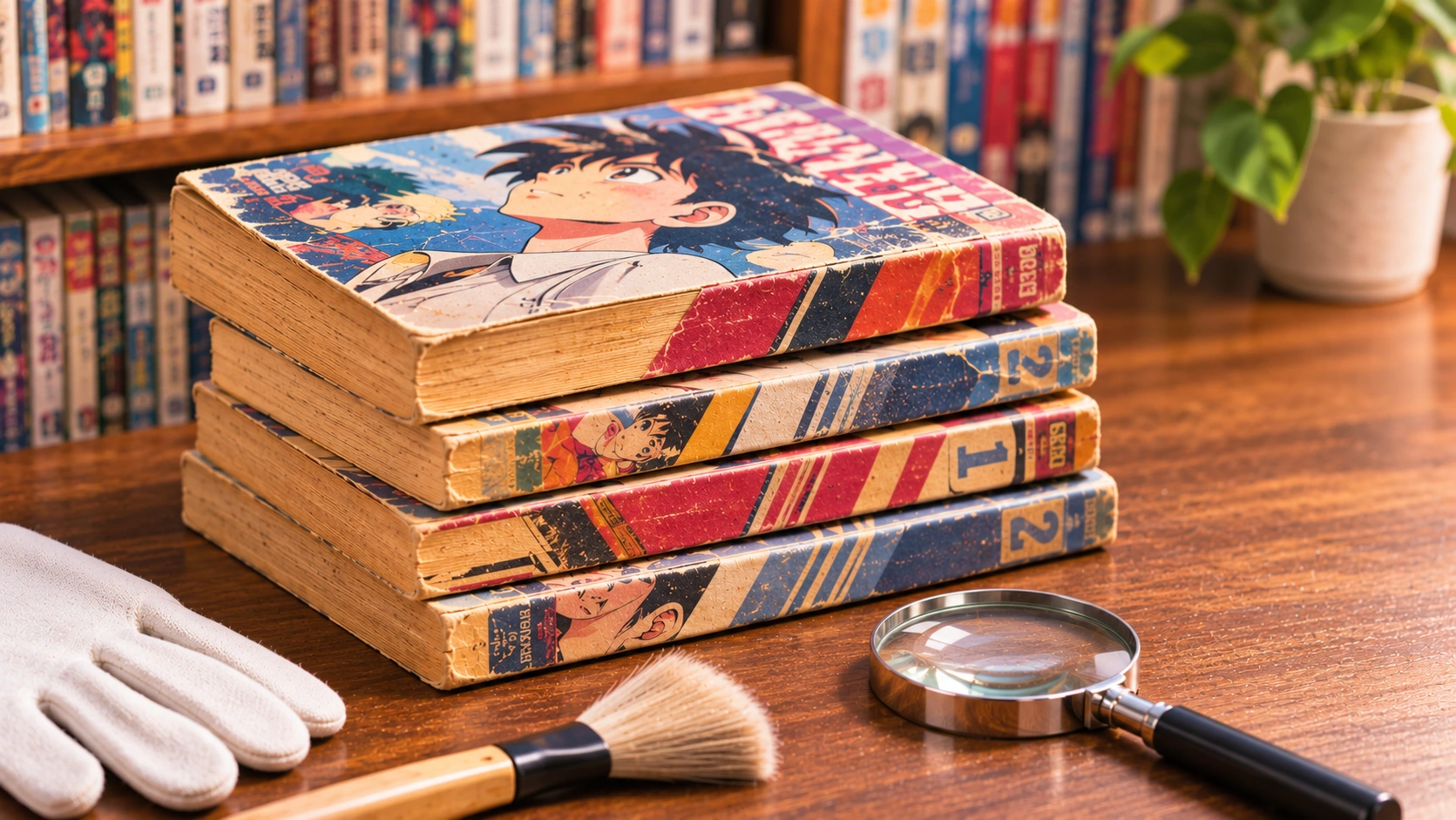
How to Care for Old Manga and Comic Books: Preventing Yellowing, Foxing, Mold, and Spine Damage
Old manga and comic books can hold tremendous sentimental and collectible value. However, paper, printing inks, adhesives, and covers naturally deteriorate over time. Proper handling and storage can help slow this process and preserve a collection for years to come.
For collectors, the appeal of an older comic book goes beyond its story and illustrations. Original cover art, printing quality, publication history, and even signs of age can contribute to its character. First editions, out-of-print volumes, and rare releases may be especially sensitive to damage or inappropriate restoration. Understanding how these books age is therefore an important part of collecting. This guide covers ten practical aspects of manga and comic book preservation, including paper yellowing, foxing, humidity control, cleaning, protective sleeves, and long-term storage.
1. Why Do Old Manga and Comic Book Pages Turn Yellow?
One of the most common changes in aging comic books is the gradual yellowing or browning of their pages. This discoloration results from chemical changes in paper, including oxidation and the breakdown of cellulose. Lignin and other components found in certain wood-based papers can also contribute to discoloration. Different paper grades age at different rates. Inexpensive, acidic paper commonly used in some older publications may become yellow and brittle more quickly than certain higher-quality papers. Heat, light, and unsuitable storage conditions can accelerate these processes. Once paper has yellowed through chemical deterioration, ordinary cleaning cannot safely restore its original color. Household bleach and other whitening chemicals can damage paper fibers, printing inks, and the collectible value of a book.
What Is Foxing?
In addition to general yellowing, older books sometimes develop scattered brown, reddish-brown, or rust-colored spots. This condition is commonly known as foxing. Foxing is not necessarily caused by a single factor. Depending on the paper and storage conditions, it may be associated with moisture, chemical reactions, metallic impurities, or certain microorganisms. Importantly, foxing does not automatically mean that active mold is present. However, rapidly developing spots, a musty odor, or fuzzy growth may indicate a moisture or mold problem that requires further attention. Do not attempt to remove foxing with bleach, alcohol, or household stain removers. These treatments can permanently damage paper and inks. For collectors, maintaining stable storage conditions and documenting existing spots is generally safer than attempting cosmetic restoration.
2. Protect Books from Sunlight and Excessive Light
Light exposure can cause fading, discoloration, and deterioration of printed materials. Ultraviolet radiation is particularly damaging, but prolonged exposure to visible light can also affect paper and printing inks. Avoid placing valuable manga or comics on shelves exposed to direct sunlight. If displaying a special edition, consider using a cabinet or display area with reduced light exposure and rotating displayed volumes periodically. UV-filtering materials may reduce certain risks, but they do not eliminate all light-related deterioration. For long-term preservation, keeping valuable books away from strong light is usually more effective than relying entirely on protective glazing.
3. Control Humidity to Reduce Mold and Paper Damage
High humidity can cause paper to swell, warp, stick together, or develop a musty smell. Persistent moisture also increases the risk of mold growth. A relatively stable indoor humidity level around 40–55% relative humidity can be a useful general target for home paper collections, although appropriate conditions depend on the materials and environment. Avoid rapid humidity fluctuations, condensation, water leaks, and damp walls. A hygrometer can help monitor the storage environment. In humid climates, a dehumidifier may be useful. Books should not be stored directly against walls with known moisture problems.
4. Store Books Without Damaging Their Spines
Most manga volumes and standard-sized comic books can be stored upright on shelves when adequately supported. Avoid packing books so tightly that removing them requires force. At the same time, books should not lean at severe angles for long periods, as this can distort their covers and bindings. Use smooth, sturdy bookends when necessary. Large, heavy, or structurally fragile books may benefit from horizontal storage. However, avoid stacking them so high that the weight damages books underneath. When removing a volume from a shelf, grasp the body of the book rather than pulling on the top of its spine.
5. Read Manga Without Cracking the Binding
Many manga volumes use adhesive binding. Some adhesives become brittle or lose flexibility with age. Forcing an older book to open completely flat can crack the adhesive or detach pages. Open the book only as far as its binding comfortably allows. Avoid folding page corners, pressing down forcefully on the spine, or leaving books face down while open. If the binding is already cracked or pages have become loose, minimize handling. For particularly valuable editions, preserving the original binding may be more important than keeping the book in regular reading circulation.
6. Clean Dust from Comic Books Safely
Dust commonly accumulates along the top edges, covers, and spines of stored books. For books in sound condition, a clean, soft brush can gently remove loose surface dust. Work carefully to avoid pushing dust between the pages. Before cleaning, inspect the book for fragile paper, flaking ink, loose cover material, or other damage. Do not wipe paper edges with a wet cloth or spray cleaning products directly onto books. Some intact laminated covers may tolerate gentle wiping with a soft, dry cloth, but deteriorating coatings and printed surfaces require additional caution. Avoid using household chemicals to remove stubborn stains. Regularly cleaning the surrounding shelves and storage area can help reduce future dust accumulation.
7. Should Manga and Comics Be Stored in Plastic Sleeves?
Protective sleeves can help reduce dust, surface abrasion, and direct handling. However, not all plastics are suitable for long-term preservation. Stable materials commonly considered for archival storage include suitable grades of polypropylene (PP), polyethylene (PE), and polyester (PET). Avoid soft PVC sleeves or materials containing potentially problematic plasticizers. Choose sleeves that fit without compressing the cover or bending the spine. Never seal a damp book inside a plastic sleeve. Trapped moisture can create conditions favorable to mold growth. For particularly valuable books, archival-quality boxes or supportive enclosures may provide better protection than sleeves alone.
8. Watch for Insects and Other Paper-Damaging Pests
Certain insects, including silverfish and cockroaches, can damage paper, bindings, and other book materials. Damp conditions, dust accumulation, and food debris may increase pest activity in storage areas. Keep shelves and surrounding spaces clean. Avoid eating or storing food near valuable collections. Periodically inspect shelf corners, the backs of books, and storage boxes for insects or signs of damage. Do not spray insecticides directly onto books. Chemical residues can harm paper and may create additional health concerns. If an infestation occurs, isolate affected materials and use an appropriate pest-management approach. Consult a preservation specialist when necessary.
9. Should Damaged Books Be Repaired or Left Original?
Repairing a collectible book can affect both its physical integrity and its originality. Ordinary adhesive tape, household glue, and permanent plastic lamination may cause discoloration, leave residues, or make future conservation work more difficult. A cracked spine or detached page should not automatically be repaired with whatever adhesive is available. For rare first editions or historically significant publications, professional conservation advice is often preferable to do-it-yourself restoration. If repairs are carried out, document the materials and methods used. In some cases, careful storage and reduced handling may be safer than attempting to make an old book look new.
10. Inspect and Document Your Collection Regularly
Even books stored in protective sleeves or cabinets should be checked periodically. Look for changes in page color, spine condition, cover shape, moisture damage, musty odors, insect activity, and unusual spotting. Pay particular attention to existing foxing. Photograph affected pages or edges so that you can compare their condition over time. For rare editions, record existing defects such as creases, tears, stains, loose pages, and previous repairs. Regular inspections can help identify environmental problems before they affect a larger part of the collection.
Preserve the Book, Not the Illusion of Newness
Caring for old manga and comic books is not about making every volume look brand new. It is about slowing deterioration while respecting the materials and history of each book. Avoiding direct sunlight, excessive heat, high humidity, rough handling, and unsuitable repairs can significantly reduce preventable damage. Some papers will continue to yellow with age, even under careful storage conditions. Foxing may also remain visible despite good preservation practices. For collectors, the goal is to protect the book's condition, originality, and history for as long as reasonably possible.