
How to Care for Diecast Model Cars: Preventing Paint Damage, Tire Deterioration, and Zinc Pest
Diecast model cars have been popular collectibles for decades, ranging from small 1:64-scale vehicles to highly detailed 1:18-scale models and larger replicas. Although many feature metal bodies, that does not mean they are immune to deterioration.
Over time, model cars may develop faded paint, brittle plastic components, cracked tires, or even swelling and cracking in their metal bodies due to a condition known as Zinc Pest. For collectors, especially those preserving rare or discontinued models, proper care helps maintain both appearance and originality. This guide explains ten important aspects of diecast model car preservation, including cleaning, display, storage, material deterioration, and regular condition inspections.
1. Understand the Materials Used in Diecast Model Cars
Most diecast model cars are made from several different materials rather than metal alone. Their bodies are often manufactured from zinc-based alloys such as Zamak, while other components may consist of plastic, rubber, other metals, and transparent materials. Models may also feature painted finishes, printed graphics, decals, and delicate details such as mirrors, antennas, and windshield wipers. Each material reacts differently to heat, light, humidity, and chemicals. Metal components may experience corrosion, while plastics can discolor or become brittle. Tires may harden, crack, or develop sticky surfaces as they age. Proper preservation therefore requires attention to the entire model, not just its metal body.
2. What Is Zinc Pest, and Why Can Metal Bodies Crack?
One of the most serious problems affecting certain diecast collectibles is Zinc Pest, a deterioration phenomenon associated with some zinc-based alloys. It has historically affected particular cast-metal objects, especially those manufactured using alloys containing problematic impurities or unsuitable compositions. Zinc Pest involves instability within the alloy, which can cause dimensional changes, distortion, swelling, and cracking. Possible warning signs include: - Swelling or deformation of the metal body - Cracks developing in cast-metal components - Doors or hoods no longer fitting properly because the body has distorted - Metal components breaking or crumbling in severe cases Not every diecast model is susceptible, and not all zinc alloys develop Zinc Pest. Once deterioration caused by internal alloy instability has begun, ordinary cleaning or surface coatings cannot reverse it. Appropriate storage conditions may help limit some contributing environmental factors, but they cannot guarantee that an established deterioration process will stop. If a model shows suspicious deformation, minimize handling and avoid attempting to bend the metal back into shape. Document its condition and seek specialist advice before attempting repairs to a valuable model.
3. Prevent Paint Fading, Cracking, and Graphic Damage
Paint finishes are an important part of a diecast model's appearance and collectible value. Although some finishes are highly durable, prolonged exposure to sunlight, heat, and unsuitable environments can contribute to discoloration or deterioration. Printed graphics, decals, and decorative details may be particularly vulnerable to abrasion and chemicals. Avoid displaying models in direct sunlight. Do not use paint thinner, acetone, automotive polishing compounds, or aggressive cleaning products without confirming their compatibility with the model's materials. Polishing can remove original clear coats or printed details that may be impossible to reproduce accurately. For rare models, preserving the original factory finish is often preferable to repainting or attempting to make the surface look new.
4. Remove Dust Without Damaging Delicate Parts
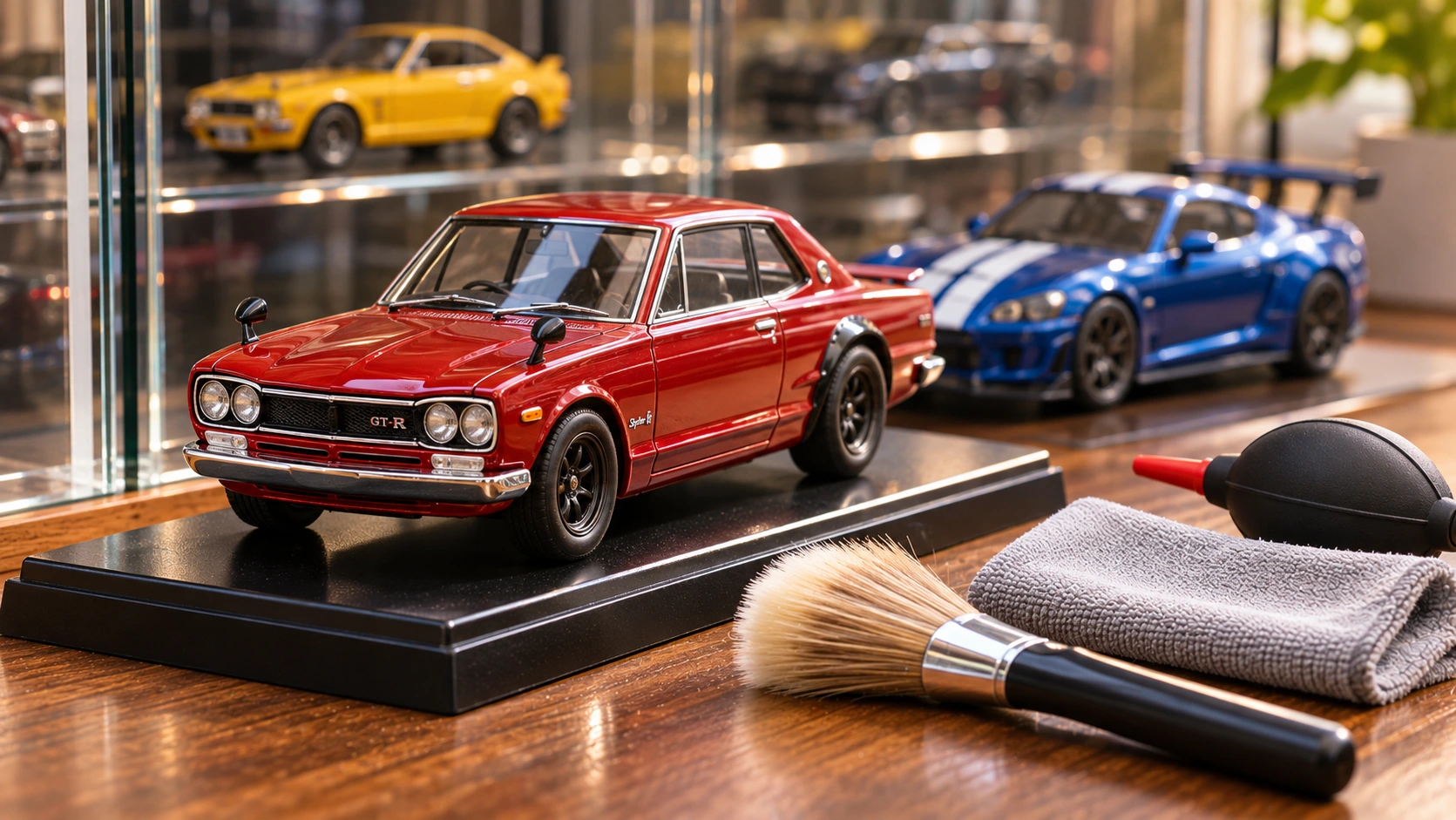
Dust frequently accumulates on models displayed outside protective cabinets. It can settle around grilles, wheel arches, windows, ventilation openings, and small decorative components. Begin with a clean, soft brush and gently remove loose dust. A hand-operated air blower may help dislodge dust from difficult areas, but use caution around loosely attached components. Avoid directing high-pressure air or compressed-air nozzles close to the model. Small mirrors, antennas, and other details may detach. A clean microfiber cloth may be suitable for certain smooth, sturdy surfaces, but avoid rubbing fragile decals or deteriorating finishes. Do not immediately apply liquid cleaners to stubborn marks. For older or valuable models, minimal cleaning is often safer than aggressive restoration.
5. Protect Model Tires from Cracking, Hardening, and Sticking
Tires can deteriorate even when a model has never been removed from its original packaging. Depending on the manufacturer and model, tires may be made from natural rubber, synthetic rubber, or flexible plastic compounds. Over time, these materials may harden, crack, become sticky, or undergo other surface changes. Some collectors encounter tires that adhere to display bases or leave marks after prolonged contact. Possible contributing factors include pressure, heat, material aging, and the migration of additives between contacting materials. Avoid leaving tires in prolonged contact with surfaces of unknown compatibility. Inspect the points where tires touch display bases periodically. Do not apply automotive tire dressings, oils, or silicone products without reliable compatibility information. These treatments may cause stains or unwanted material changes. For valuable models, a suitable support system may reduce prolonged pressure on the tires, provided it does not introduce stress elsewhere.
6. Handle Clear Plastic and Small Details Carefully
Windshields, headlights, taillights, and other transparent components are often made from plastics that scratch easily. Certain plastics may also yellow, become cloudy, or crack after prolonged exposure to heat, light, or incompatible chemicals. Avoid using alcohol, paint thinner, or solvents on clear parts unless the plastic type and compatibility are known. Some materials can develop fine cracks or cloudiness after solvent exposure. Use soft brushes or low-contact dust-removal methods whenever possible. Small components such as mirrors, wipers, antennas, and emblems are particularly fragile. When lifting a model, support its body or another structurally sound area rather than gripping decorative parts. If a component becomes loose, store it safely and document its original position before considering repair.
7. Maintain Suitable Temperature and Humidity
Although diecast models often contain metal bodies, their plastic, rubber, adhesive, and decorative components can be affected by poor storage conditions. High temperatures may accelerate deterioration of certain plastics, rubbers, adhesives, and finishes. Excessive humidity can increase corrosion risks for some metal components and damage cardboard packaging. Store models in a relatively stable indoor environment away from direct sunlight and concentrated heat. Avoid leaving models inside vehicles parked in the sun or in storage rooms that regularly become very hot. In humid climates, a hygrometer can help monitor conditions, while a dehumidifier may be useful when necessary. Rapid temperature changes that cause condensation should also be avoided.
8. Display Cabinets or Original Boxes: Which Is Better?
Displaying diecast models makes their details easier to appreciate, but exposed models are more vulnerable to dust, light, and accidental damage. An enclosed display cabinet can reduce dust accumulation and unnecessary handling. Choose a stable cabinet positioned away from direct sunlight. Original boxes and packaging are also important, especially for collectible or discontinued editions. However, original packaging is not always ideal for long-term preservation. Certain foams, flexible plastics, and supporting materials can deteriorate, become sticky, or leave marks after prolonged contact with the model. Inspect packaging periodically, particularly where it touches paint, tires, and plastic components. If original packing materials begin to deteriorate, consider a safer storage arrangement while preserving the original packaging separately when appropriate.
9. Should Old Diecast Models Be Repaired or Preserved As-Is?
Repairs can affect a collectible model's originality and condition assessment. Repainting, replacing wheels, changing components, or gluing detached parts may improve appearance but can reduce the amount of original factory material. For rare models, repairs performed without understanding the original paints, materials, and assembly methods may cause further damage. Avoid using cyanoacrylate superglue or other general-purpose adhesives on transparent parts without checking compatibility. Certain adhesives can cause white residue or clouding. If Zinc Pest is suspected, forcing distorted metal components back into position may worsen cracking. Before repairing a model, consider whether the priority is preserving originality or restoring appearance for display. Document any replacement parts, repainting, or other restoration work.
10. Inspect Your Models Regularly, Even When Stored
Models can deteriorate while sitting untouched in cabinets or boxes. Inspect metal bodies, paint, graphics, tires, transparent parts, and decorative components periodically. Look for: - Swelling, cracking, or distortion of cast-metal bodies - Faded, blistered, or cracked paint - Hardened, cracked, sticky, or adhering tires - Cloudy, yellowed, or cracked transparent plastic - Loose or detached small components - Residue or marks from packaging materials For valuable models, photograph each vehicle from several angles when adding it to your collection. These reference images can help identify changes that develop over time. Regular documentation may also reveal gradual problems such as suspected Zinc Pest or tire deterioration before they become severe.
Preserve the Metal, Paint, and Original Details
Diecast model cars may appear durable because of their metal bodies, but they are complex collectibles made from materials that age differently. Avoiding direct sunlight, excessive heat, high humidity, aggressive cleaning, and unnecessary chemical treatments can reduce many preventable risks. For conditions such as Zinc Pest, proper storage cannot guarantee prevention or reversal of deterioration caused by alloy instability. However, regular inspections and photographic records can help collectors recognize changes earlier. Preserving original paint, wheels, body components, and packaging may be just as important as maintaining an attractive display. The goal is not to make every old model look new, but to protect its original details and history for as long as possible.