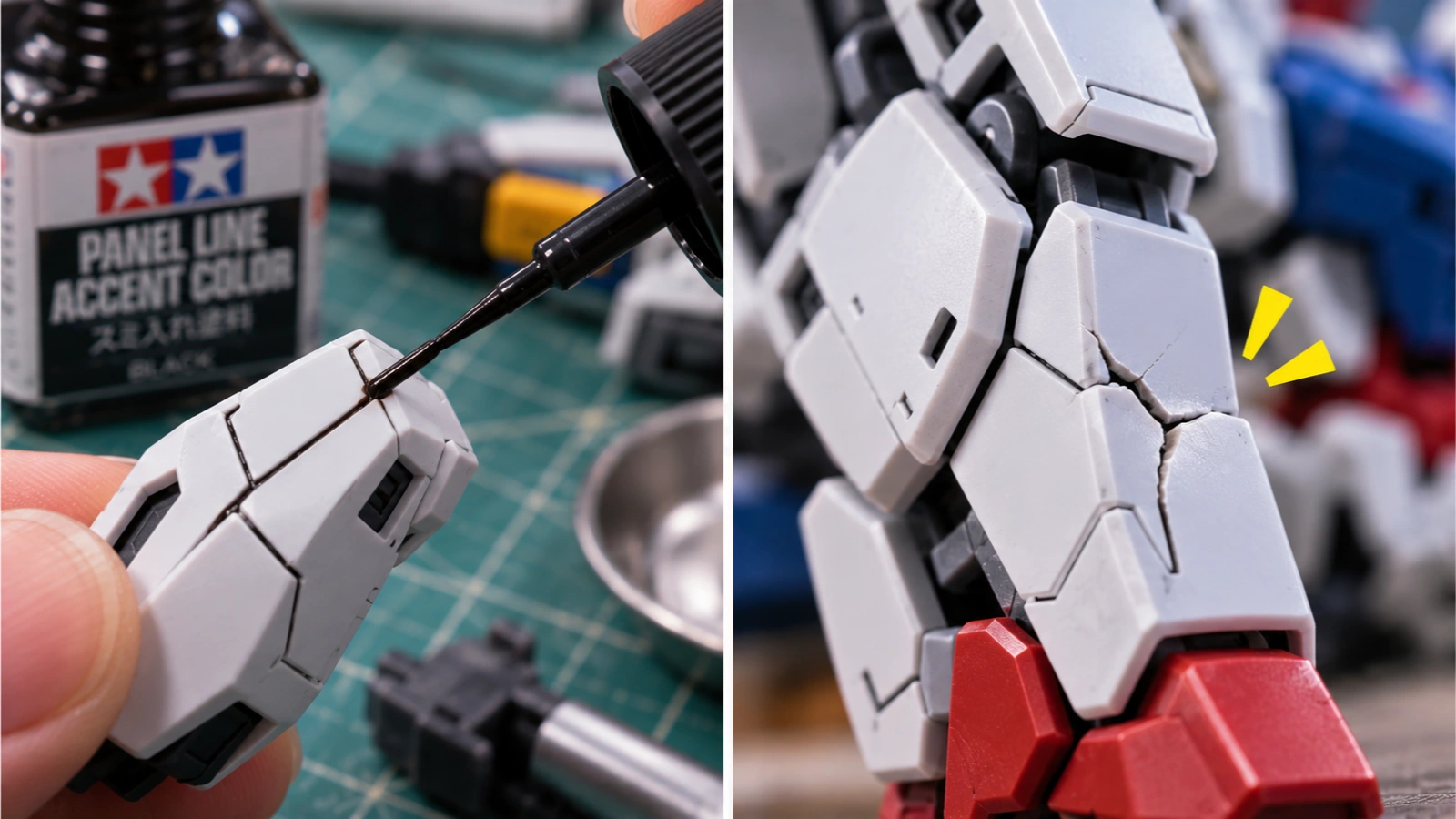
Why Does Gunpla Plastic Crack After Panel Lining? How to Prevent It
Panel lining adds detail to your Gunpla, but sometimes the plastic develops cracks afterward. This can happen when panel lining fluid seeps into seams, joints, or other tight spaces between parts.
Why Can Panel Lining Cause Plastic to Crack?
Some panel lining products, especially enamel-based washes, contain solvents that can affect certain plastics used in Gunpla kits. When too much fluid is applied, it may seep into gaps between assembled parts. Areas under stress, such as pegs and tightly fitted joints, can be especially vulnerable to cracking. The damage isn't always visible immediately. Sometimes cracks only appear after the model has been assembled.
How Can You Panel Line More Safely?
1. Panel line before assembly If you're using an enamel-based panel liner, applying it while the parts are still separated can reduce the risk of fluid becoming trapped inside assembled joints. 2. Avoid applying too much fluid Use a small amount and let it flow along the recessed lines. Avoid allowing excess fluid to collect around joints, pegs, or connection points. 3. Choose the right tools Some panel lining markers may be easier to control than liquid washes. However, different markers contain different inks and solvents, so always check the manufacturer's instructions. When using an enamel wash, a fully cured, compatible clear coat may help protect the underlying plastic. Be aware that uncoated gaps and connection points can still be exposed.
What If the Plastic Has Already Cracked?
Small cracks may be repairable with a model adhesive suitable for the specific plastic. However, if the damage affects a joint peg or another load-bearing part, glue alone may not provide enough strength. Avoid forcing damaged parts to move, as this could make the cracks worse.